
On September 30, 2006 a document was produced by what are proclaimed as “six different Brazilian Anglican jurisdictions – some in communion with the See of Canterbury, others not.” The “Boa Viagem" document creates the “Anglican Movement for a Common Cause.” It was of so little note that it hardly made it onto the web.
It is a tragically irrelevant and even sad document.
What is meant by “Anglican Jurisdictions” in this document is clearly NOT related to the Anglican Communion or any other collection of dioceses or Provinces that would make a whole entity in which there could be jurisdictions. Rather this is a document by six churches all who claim an Anglican identity. That is quite a different matter.
The players:
- The break away “Anglican Diocese of Recife.” This one claims to be part of the Anglican Communion by way of the Province of the Southern Cone.
- The Anglican Church of
- The Episcopal Reformed Church – IER
- The
- The Anglican Orthodox Church
- The
- The Anglican Catholic Church of
How the last on this list got on I can’t say.
The only one of these churches that has any connection to the Anglican Communion is the Anglican Diocese of Recife, and its connection stretches the bonds of affection a great deal. A press release and the text of the letter from the Archbishop of the Southern Cone taking on the bishop and most of the clergy of the Diocese of Recife can be read HERE.
The regular Diocese of Recife, a diocese in the Episcopal Church of Brazil, continues and is listed in the Anglican Communion website as the diocese. This “Anglican Diocese of Recife” is an example of the madness of dual jurisdictions in a specific area, each claiming to be part of the Anglican Communion.
So, this band of bishops – Some Archbishops and Primates, some merely bishops, got together with only the slimmest thread of connection to the Anglican Communion and pledged themselves committed to various principles – Bible, creeds, etc, and ending up with “endorsing of the theological and ethical content of Resolution 1.10 of the Lambeth Conference, 1998.” Of all the signers of this document only Bishop Cavalcanti would have been at that Lambeth Conference (I don’t know if he was, for I don’t know his consecration date.) The others were not recognized. No telling how many people this lump of prelates represent.
A simple sketch of the history of the Church in
It would appear that the only thing that is peculiar about its pledge that separates it from pre- 2003 statements of Anglican unity is the reference to Lambeth 1.10. That is, the big “Pro-Unity” here is opposition to Gay and Lesbian persons.
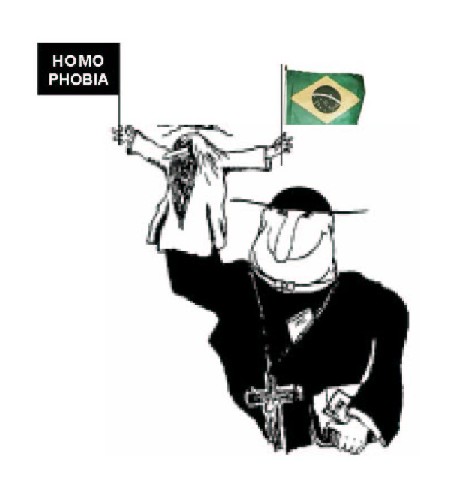 Here is a cartoon posted in a response to Virtueonline’s posting of this Diocesan News Release.
I will give credit to the source if someone can tell me who did it. But it is too good not to pass on. By the way, no one else seems to have picked up on this bit of “World News” except Mad Priest, who commented,
“David V, has excelled himself today with this wonderfully ironic headline and first paragraph. I didn't read any further - he's so funny there's always the risk of internal bleeding.
BRAZILIAN ANGLICAN LEADERS CREATE PRO-UNITY MOVEMENT
Representatives from six different Brazilian Anglican jurisdictions - some in communion with the See of
This whole thing is part of the mess of wandering bishops, small break off denominations, conflicting claims of Anglican identity. The only saving grace to it all is that it is irrelevant, mostly.

