After a very short lull at Christmas the realignment crowd is back in action. I hope their Christmas was peaceful. Mine was.
I had hoped that the Incarnational truce might extend into the New Year, but no such luck. In the past twelve days there have been various stirrings:
It began with the ordination at the Network conference in
At the time of the ordinations it was pointed out that the ordinations in
In the new year the Archbishop of Uganda wrote a scathing letter to The Rt. Rev. Peter Lee, Bishop of Virginia concerning Bishop Lee’s determination that The Rev. J. Phillip Ashley was no longer in the ordained ministry of the Episcopal Church. Again, there was a flurry of interest, but then it subsided.
The tone of Archbishop Orombi’s letter was at the very least belligerent. He accused Bishop Lee of misunderstanding the plain English of Mr. Ashley’s letter of resignation just as by implication Bishop Lee and others are involved in “reinventing the plain meaning of Scripture.” He ended his letter by informing Bishop Lee that “We pray for your repentance and the repentance of all the ECUSA leadership, and for your return to the historic faith and communion of the one, holy, catholic and apostolic church.” Not exactly a friendly bit of interchange!
Archbishop Orombi in his letter to Bishop Lee confused three distinct issues: (i) the indelible character of ordination, (ii) matters of Church discipline in which those ordained are licensed, enrolled as part of the clergy of the Church and practice by oaths of obedience and canons of the church and may not unilaterally end their canonical relationship with the Bishop who has charge over them, and (iii) the principle, ancient in origins and recently affirmed in the Windsor Report and other documents, that within diocesan boundaries it is the bishop of that location that holds the right to issue permission to act in a ministerial capacity.
Archbisho Orombi was right about only the first of these three, and used the truth of that statement to essentially disregard the oaths of obedience Mr. Ashley took at his ordination or the ancient agreement of the Church concerning area authority of bishops. Well, it will all come home. One day Mr. Ashley will decide that Archbishop Orombi or the bishop of Rwenzori Diocese has no hold on him either. How can one trust a person in larger things who cannot keep his word on lesser things?
Mr. Ashley cannot unilaterally determine that he is free from the canonical authority of the Bishop. I have not always been comfortable to be a priest under such a commitment to obedience, but at least I acknowledge the reality of the oath.
Bishop Lee and the Standing Committee of Virginia did Mr. Ashley a service in determining that Mr. Ashley has renounced the ministry of the Episcopal Church. At least then the real issue is clear: Mr. Ashley is not licensed to minister in the Episcopal Church, no matter the validity of his orders. He is operating under license of the Bishop of Rwenzori in the Church of the
This small church fight is an example of the total disregard by the realignment leadership of the boundaries of ecclesiastical authority. It is one of a continuing salvo of fire against the authority of bishops with whom they disagree.
There are now a number of Provincial Archbishops and several bishops that have declared that their churches are out of communion with the Episcopal Church and that they are therefore not bound by the normal boundary rules. Morgan’s article in Christianity Today lists the following:
That same article makes it clear that the Bishop of
Morgan’s article is a must read. In particular his description of a realigment global strategy is important to understand.
If Morgan is right, the strategy that is now in place puts off the real place of hostile takeover to the Lambeth Conference of 2008. He quotes Stephen Noll as saying, “the Episcopal Church, as it is now constituted, is unreformable.” That being the case, the strategy outlined by Morgan is important for it points directly to Lambeth and does not mention General Convention at all.
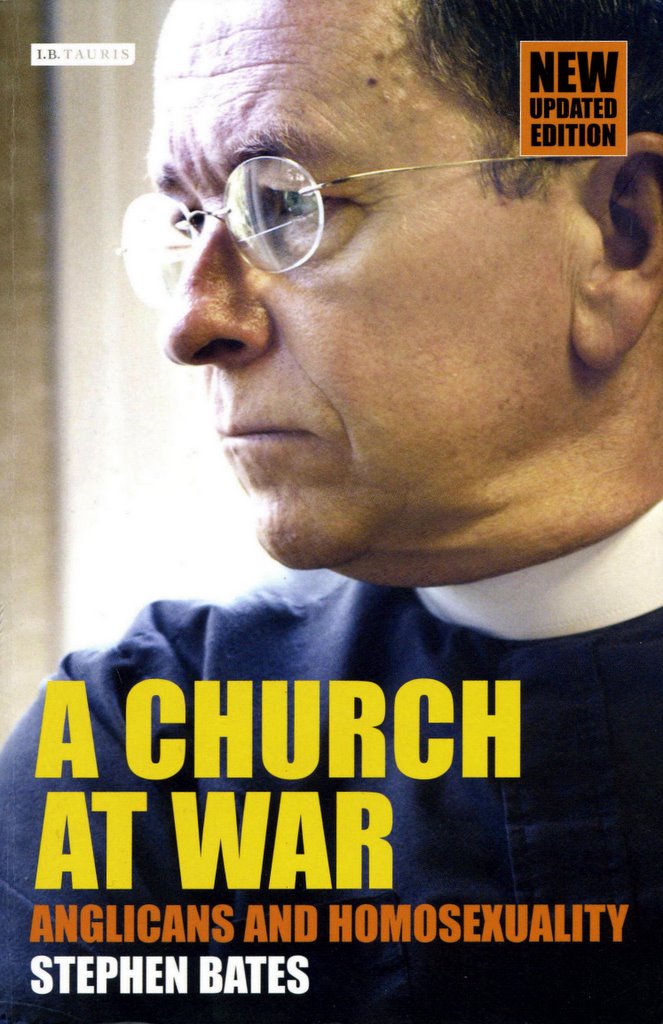
But one piece of the strategy is not mentioned, but I believe is certainly assumed: I believe there will be a challenge mounted against the presence of Episcopal Church bishops and an insistence that Lambeth include only those who will renounce the actions of the Episcopal Church. The alliances being made between several Episcopal Church bishops, bishops from several Provinces of the Anglican Communion and a variety of continuing church leaders and members of the Reformed Episcopal Church are all pointing to the same hostile takeover previously written about in terms of a coup by a wide variety of authors on the internet and by Stephen Bates in his book, A Church at War.
What is perhaps of most importance at the moment is that if Mr. Morgan is correct the real place where all this will get settled is not at General Convention this year but at Lambeth in 2008. According to Morgan, at that time demands will be made for a covenant statement that Scripture is supreme “over all church teachings, leaders and institutions.” Morgan speaks of this as an Anglican “covenant.”
This should not be confused with the Anglican Covenant proposed in the
That slogan was used by Archbishop Orombi in his letter to Bishop Lee when he said that ECUSA was “reinventing the plain meaning of Scripture.” In an interestingly scary way the Bishop of Pittsburgh is quoted by Morgan as saying, “it’s (the Anglican church) also worldwide probably the best positioned to say – “No!” – when the culture gets away from the plain revelation of God.”
It is a short step from the “plain meaning of Scripture” to the “plain revelation of God.” The first seems more or less reasonable – proposing that Scripture means what it says - OK, with perhaps some quibble about the offenses for which execution is the required remedy and the details of the creation story and perhaps the massive problem that the New Covenant is not congruent with the Old Covenant. But the second, “the plain revelation of God,” takes us down the path that places the supremacy of Scripture outside the interpretative environment of the Church, with all its quirks, and in the hands of those to whom it has been particularly revealed by God. And just who might those persons be?
This is why the salvos of these past days are of importance. The various incursions into the Episcopal Church have assumed broken communion. They assume to that the Episcopal Church is “unreformable.” Things are moving to a showdown, most likely at Lambeth where a Trojan Horse covenant on Scripture will be presented and then overwhelmed by the claim of “the plain revelation of God.” The end of all this will be a mess of revelation pottage. Having thrown out us revisionists – so-called – they will begin throwing out one another on the basis of the charisma of knowing the “plain revelation of God.” Good luck! And their last state will be worse than their first.
It seems to me the way forward for progressive folk in the Episcopal Church is to continue being part of the Episcopal Church, learning as we go to accept criticism, love the critics, and do a lot of listening. We ought to assume we have an obligation to be part of the Anglican Communion and its instruments of unity. We may or may not be part of the Anglican Communion if it gets redefined by the realignment folk, we may or may not be in communion with the Bishop of Bolivia or the Archbishop of Uganda. But it will all work out alright in the end. God, the great net fisher, will sort it all out. Meanwhile there are people to feed, love, challenge and engage.